
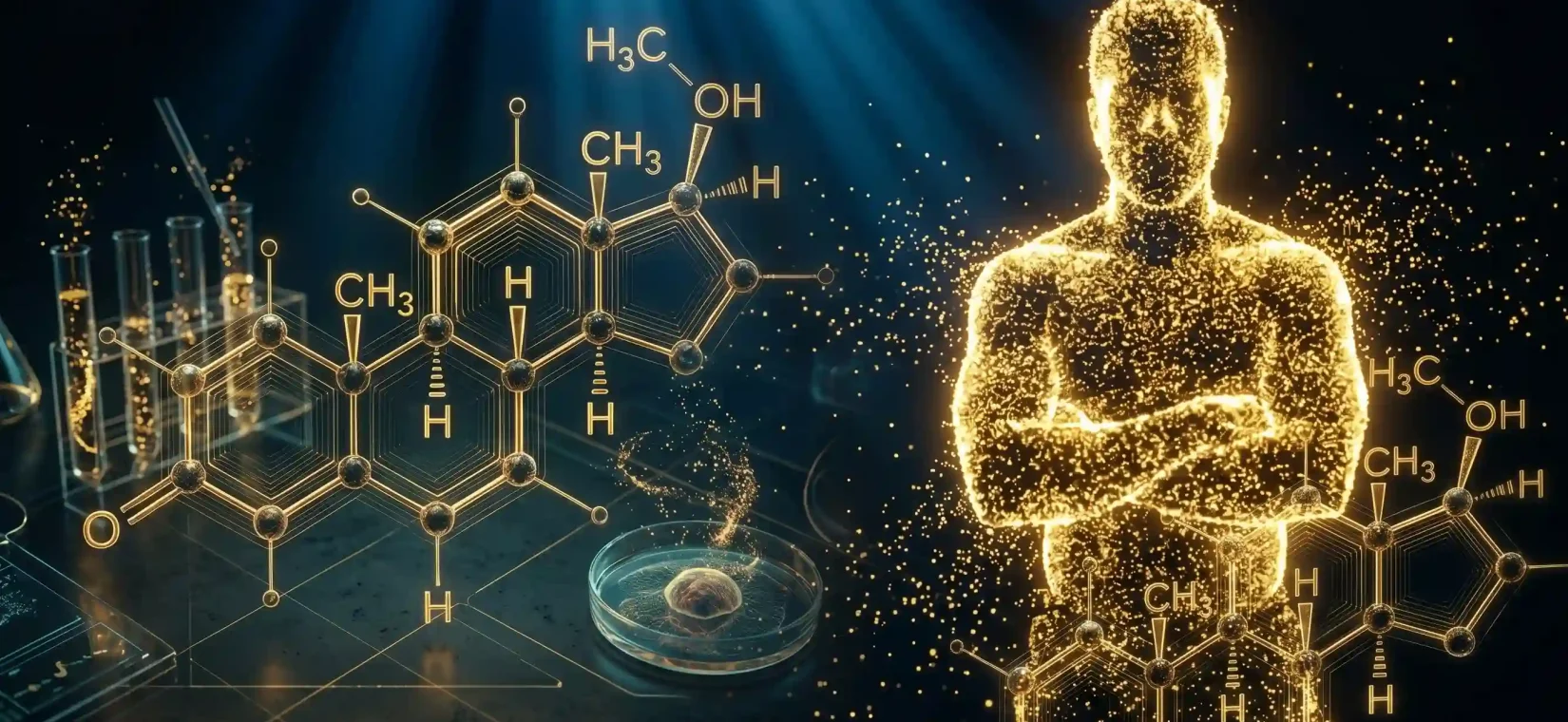
Low testosterone is no longer just an old man’s problem. Men in their 20s and 30s across India are reporting symptoms — low energy, poor gym performance, brain fog, low libido, and stubborn belly fat — and most don’t even know testosterone is the reason.
The good news: you don’t need injections or TRT to fix this. In this guide, we break down exactly how to increase testosterone naturally using lifestyle changes, nutrition, and clinically studied supplements. Every method here is backed by peer-reviewed research.

What Is Testosterone and Why Does It Matter?
Testosterone is the primary male sex hormone produced mainly in the testes. It controls muscle mass and strength, fat distribution, bone density, sex drive and sperm production, mood and mental clarity, and energy levels and recovery.
Normal testosterone levels in men range from 300 to 1000 ng/dL. Anything below 300 ng/dL is classified as low testosterone (hypogonadism). But many men function poorly even in the 300–450 range — what doctors call “low-normal.”
The global average is declining. Studies show men today have significantly lower testosterone than their fathers and grandfathers at the same age. Sedentary lifestyle, chronic stress, poor sleep, and ultra-processed diets are the primary drivers.
Signs Your Testosterone May Be Low
Before jumping into solutions, check if you recognise these symptoms:
- Constant fatigue — even after 8 hours of sleep
- Loss of muscle mass or difficulty building muscle
- Increased body fat, especially around the belly
- Low sex drive or erectile dysfunction
- Brain fog and difficulty concentrating
- Mood swings, irritability, or depression
- Weaker gym performance despite consistent training
- Poor recovery after workouts
If 3 or more of these apply to you, your testosterone levels are likely suboptimal. A simple blood test (Total Testosterone + Free Testosterone) from any diagnostic lab will confirm it.
9 Proven Ways to Increase Testosterone Naturally
Here is a quick overview of all methods covered in this guide:
| Method | Time to See Results | Difficulty | Impact |
|---|---|---|---|
| Fix Sleep (7–9 hrs) | 2–4 weeks | Easy | ⭐⭐⭐⭐⭐ |
| Strength Training | 4–8 weeks | Moderate | ⭐⭐⭐⭐⭐ |
| Reduce Stress / Cortisol | 2–6 weeks | Hard | ⭐⭐⭐⭐ |
| Optimise Diet | 4–8 weeks | Moderate | ⭐⭐⭐⭐ |
| Lose Belly Fat | 8–16 weeks | Hard | ⭐⭐⭐⭐ |
| Vitamin D Optimisation | 4–8 weeks | Easy | ⭐⭐⭐ |
| Zinc + Magnesium | 4–8 weeks | Easy | ⭐⭐⭐ |
| Cut Xenoestrogen Exposure | 8–16 weeks | Moderate | ⭐⭐⭐ |
| Quality Supplement Stack | 4–8 weeks | Easy | ⭐⭐⭐⭐ |
1. Fix Your Sleep First (This Is Non-Negotiable)
Testosterone is produced almost entirely during sleep — specifically during deep REM sleep cycles. The research here is unambiguous.
| [1] Effect of 1 Week of Sleep Restriction on Testosterone Levels in Young Healthy Men — JAMA, 2011 |
This landmark JAMA study found that men who slept only 5 hours per night for one week had testosterone levels 10–15% lower than their baseline. One week. That is how fast poor sleep destroys your hormones.
| [3] Testosterone in Males as Enhanced by Oneirogen and Fitness: Effects of Sleep and Exercise — Current Opinion in Endocrinology, 2015 |
A 2015 review confirmed the bidirectional relationship — poor sleep suppresses testosterone, and lower testosterone worsens sleep quality, creating a self-reinforcing cycle.
What to do:
- Get 7–9 hours of uninterrupted sleep every night
- Sleep in a completely dark, cool room (18–21°C is optimal)
- Avoid screens for 60 minutes before bed
- Consistent sleep and wake times — even on weekends
- Avoid alcohol — it kills sleep quality and directly suppresses testosterone
2. Lift Heavy Weights — Especially Compound Movements
Resistance training is one of the most powerful natural testosterone stimulators. Compound movements that recruit large muscle groups produce the biggest hormonal response.
| [2] Hormonal Responses to Resistance Exercise in Men: A Review — Sports Medicine, 2005 |
This review of 30+ studies confirmed that high-intensity resistance training with large muscle groups (squats, deadlifts, rows) produces the largest acute testosterone elevations. The effect is amplified with shorter rest periods (60–90 seconds) and multi-joint exercises.
Best exercises for testosterone: Squats, Deadlifts, Bench Press, Overhead Press, and Barbell Rows. Aim for 3–5 sets in the 5–8 rep range using heavy loads, 3–5 times per week. Avoid overtraining — chronically elevated cortisol from excessive training will suppress testosterone.
3. Reduce Chronic Stress and Lower Cortisol
Cortisol and testosterone have an inverse relationship. When cortisol is chronically elevated — from work stress, financial pressure, or overtraining — testosterone drops. This is a biological survival mechanism: your body prioritises stress response over reproduction.
| [4] Stress, Cortisol, and Male Reproductive Function — Fertility and Sterility, 2003 |
Research published in Fertility and Sterility demonstrated that chronic psychological stress significantly suppresses LH (luteinising hormone) — the signal that tells your testes to produce testosterone. The suppression was measurable within days of sustained stress exposure.
How to reduce cortisol: 10–15 minutes of daily meditation or controlled breathing, daily walks in nature (even 20 minutes significantly reduces cortisol), reducing caffeine after 2pm, cutting social media and news consumption, and prioritising recovery days between training sessions.
4. Optimise Your Diet for Hormone Production
Testosterone is synthesised from cholesterol. Chronically low-fat diets have been directly linked to lower testosterone levels in multiple studies.
| [6] Low-Fat Diets and Testosterone in Men: Systematic Review and Meta-Analysis — Journal of Steroid Biochemistry, 2021 |
This 2021 meta-analysis of 6 studies found that men on low-fat diets had significantly lower testosterone compared to men on higher-fat diets. The effect was consistent across age groups and health statuses. Your body needs dietary fat — particularly saturated and monounsaturated — to manufacture hormones.
Testosterone-supporting foods: Whole eggs (including yolk), red meat 2–3 times per week, fatty fish such as salmon and sardines, avocados and olive oil, nuts including brazil nuts and almonds, shellfish (oysters and shrimp are extremely high in zinc), and cruciferous vegetables like broccoli and cauliflower which help reduce estrogen.
What to avoid: Ultra-processed foods and seed oils, excess sugar and refined carbs, soy in large quantities, and alcohol — particularly beer which contains estrogenic compounds.
5. Lose Belly Fat
Fat cells — especially visceral belly fat — contain an enzyme called aromatase that converts testosterone into estrogen. The more belly fat you carry, the more testosterone you are losing to conversion.
| [7] Aromatase Activity, Obesity, and Testosterone: A Review — Clinical Endocrinology, 2008 |
This review confirmed the vicious cycle: low testosterone leads to more fat storage, which increases aromatase activity, which converts more testosterone to estrogen, which drives further fat accumulation. Breaking this cycle through fat loss is one of the fastest ways to raise free testosterone — even a 10% reduction in body fat has been shown to significantly improve levels in overweight men.
Best approach: a caloric deficit of 300–500 calories per day, high protein intake at 2g per kg of bodyweight to preserve muscle, strength training to maintain muscle while in deficit, and prioritising sleep to avoid hormonal disruption from sleep deprivation.
6. Get Enough Vitamin D
Vitamin D is technically a hormone precursor. Vitamin D receptors are found in testosterone-producing Leydig cells, and the relationship between Vitamin D status and testosterone is well-established in the literature.
| [8] Vitamin D and Testosterone in Healthy Men: A Randomized Controlled Trial — Hormone and Metabolic Research, 2011 |
This RCT found that men who supplemented with 3332 IU of Vitamin D daily for one year had significantly higher testosterone levels compared to the placebo group — an average increase of 25.2%. This is one of the strongest single-nutrient intervention studies for testosterone.
| [9] Vitamin D Deficiency in India: Prevalence, Causalities and Interventions — Nutrients, 2014 |
In India, despite abundant sunlight, Vitamin D deficiency is extremely common — this 2014 study found over 70% of urban Indians are Vitamin D deficient, primarily due to indoor lifestyles, clothing habits, and air pollution reducing UV penetration.
What to do: Get 15–30 minutes of direct sunlight daily (arms and legs exposed, 10am–2pm window). If deficient, supplement with 2000–5000 IU Vitamin D3 daily. Take D3 with K2 and fat for better absorption. Optimal blood levels are 50–80 ng/mL.
7. Don’t Neglect Zinc and Magnesium
Two minerals are critically important for testosterone production and chronically under-consumed by most men.
| [10] Zinc Is an Essential Element for Male Fertility: A Review of Zn Roles in Men’s Health — Journal of Reproduction & Infertility, 2018 |
Zinc is directly involved in testosterone synthesis at the cellular level. Zinc deficiency is strongly associated with low testosterone, and supplementation in deficient men restores levels significantly. Found in red meat, shellfish, and seeds. Aim for 25–45mg per day if deficient.
| [11] Magnesium and Testosterone: Free Testosterone Increase with Supplementation — Biological Trace Element Research, 2011 |
This study found that magnesium supplementation significantly increased both free and total testosterone in sedentary and athletic men. Magnesium reduces SHBG (sex hormone binding globulin) — the protein that binds testosterone and makes it unavailable to the body. Aim for 400–500mg per day as magnesium glycinate or malate for better absorption.
8. Minimise Exposure to Estrogen Mimickers (Xenoestrogens)
Xenoestrogens are synthetic compounds that mimic estrogen in your body and disrupt hormone balance. They are found in everyday products and are near-impossible to eliminate completely — but reducing exposure meaningfully reduces estrogenic load.
| [12] Endocrine Disruption by Bisphenol A (BPA) and Phthalates: A Review — Endocrine Reviews, 2012 |
This comprehensive review found that BPA and phthalates — found in plastics, food packaging, and personal care products — are associated with reduced testosterone levels and impaired testicular function in men. The effects are dose-dependent and accumulate over years of exposure.
Practical steps: Avoid heating food in plastic containers, wash produce thoroughly, use a good water filter, choose cosmetics and deodorants free of parabens and phthalates, and avoid canned foods with BPA linings where possible.
9. Consider a Quality Testosterone Booster Supplement
Lifestyle changes take 8–16 weeks to show measurable results in bloodwork. A well-formulated testosterone booster can accelerate results by supplying the raw materials for hormone production at clinical doses.
| [13] Withania somnifera (Ashwagandha/KSM-66) and Testosterone: Double-Blind RCT — American Journal of Men’s Health, 2019 |
This double-blind RCT found that men supplementing with KSM-66 Ashwagandha for 8 weeks had significantly higher testosterone levels (up to 14.7% increase), higher DHEA-S, and significantly lower cortisol compared to placebo. The effect was attributed to both direct androgenic activity and cortisol reduction.
| [14] D-Aspartic Acid Supplementation Combined with 28 Days of Heavy Resistance Training — Journal of the International Society of Sports Nutrition, 2017 |
D-Aspartic Acid supplementation combined with resistance training produced significant increases in free testosterone and total testosterone compared to training alone, confirming synergistic effects when supplementation accompanies a solid training program.
What to look for in a legitimate testosterone booster: Ashwagandha (KSM-66 or Sensoril), Zinc at least 25mg as zinc picolinate or citrate, Vitamin D3 at minimum 2000 IU, D-Aspartic Acid, Fenugreek extract, and Magnesium as glycinate or malate. Avoid products with proprietary blends, excessive caffeine, or unverified ingredients.
How Long Does It Take to See Results?
This depends on how depleted your levels are and how aggressively you implement changes:
- Sleep and stress improvements:2–4 weeks for noticeable energy and mood changes
- Strength training:4–8 weeks for measurable hormonal improvements
- Nutrition and supplementation:4–8 weeks
- Fat loss (if overweight):8–16 weeks for significant testosterone improvement
The fastest approach is stacking all methods simultaneously. Men who do this consistently report feeling noticeably different within 30 days, even before bloodwork shows changes.
Why Testosterone Decline Is Accelerating in India
Urban Indian men face a unique combination of factors driving testosterone down — sedentary desk jobs with 8–12 hours of daily sitting, high-stress work culture and long commutes, chronic sleep debt from late nights, diets shifting toward ultra-processed foods and vegetable oils, Vitamin D deficiency despite tropical climate due to indoor lifestyles, rising obesity rates particularly central abdominal obesity, and increased exposure to plastics and synthetic chemicals.
This is why testosterone-related symptoms are appearing in Indian men at younger ages than ever before. The solution is not complicated — but it requires deliberate action across multiple areas simultaneously.
When to See a Doctor
Natural methods work for most men with suboptimal but not clinically low testosterone. See a doctor if your Total Testosterone is below 300 ng/dL on bloodwork, you have been consistent with lifestyle changes for 3–6 months with no improvement, you have symptoms like testicular pain or infertility, or you are over 40 and symptoms are severe.
Frequently Asked Questions
Q1. Can I increase testosterone naturally without supplements?
Yes. Sleep, training, stress reduction, and nutrition are the foundation. Supplements accelerate the process but are not required if you execute lifestyle changes consistently.
Q2. How much can testosterone increase naturally?
Men with suboptimal levels in the 300–500 ng/dL range can often reach 600–800 ng/dL through aggressive lifestyle optimisation. Men with clinically low levels below 300 ng/dL may need medical support in addition to lifestyle changes.
Q3. Do testosterone boosters actually work?
Quality testosterone boosters with clinically studied ingredients — KSM-66 Ashwagandha, Zinc, D-Aspartic Acid, Fenugreek — have genuine peer-reviewed evidence behind them. They are not replacements for lifestyle changes but work synergistically with a solid foundation.
Q4. Is intermittent fasting good for testosterone?
Short-term fasting can acutely increase testosterone. Chronic severe caloric restriction suppresses testosterone. Intermittent fasting with adequate total calorie intake is generally beneficial for hormone optimisation.
Q5. How do I know if my testosterone is actually low?
Get a blood test measuring Total Testosterone and Free Testosterone. Any diagnostic lab in India (Thyrocare, Dr Lal PathLabs, SRL) offers this. Optimal range for men is 600–900 ng/dL. Below 450 ng/dL warrants immediate lifestyle intervention. Below 300 ng/dL warrants a doctor visit.
Conclusion
Increasing testosterone naturally is not a hack — it is a system. Sleep, heavy training, reduced stress, better nutrition, and targeted supplementation all work together to shift your hormonal environment. The research is clear on every single method covered in this guide.
The men who see the biggest results stack all of these changes simultaneously and stay consistent for 8–12 weeks. Start with sleep tonight. Add the training this week. Let the compounding do its work.
References & Research Citations
All studies cited in this article are peer-reviewed and sourced from PubMed (National Library of Medicine). Click any citation to read the full study.

3 Comments
[…] See our complete guide: How to Increase Testosterone Naturally — 9 Proven Methods. […]
[…] Check this: How to Increase Testosterone Naturally: 9 Proven Methods That Actually Work […]
[…] Read More: How to Increase Testosterone Naturally: 9 Proven Methods That Actually Work […]