
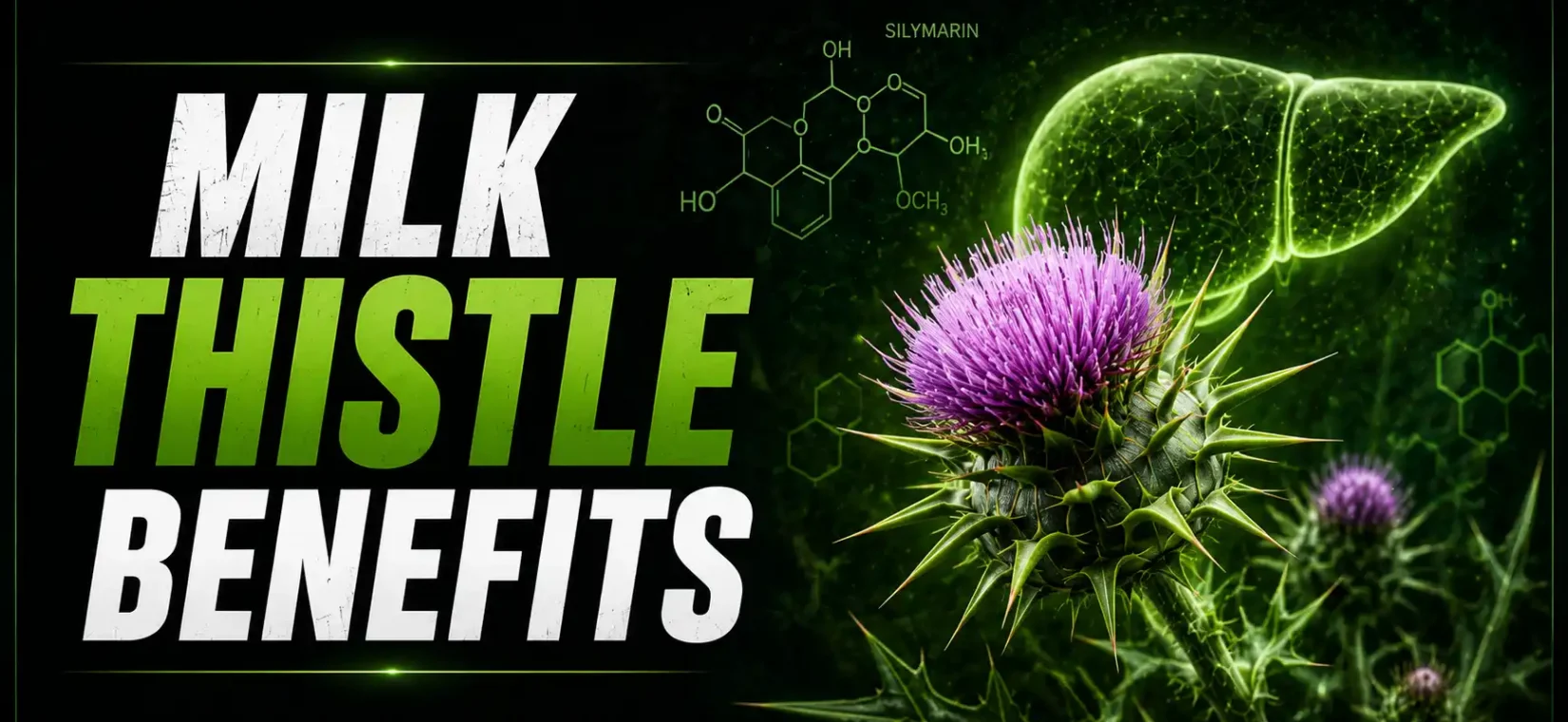
Milk Thistle has been used medicinally for over 2,000 years. But unlike most traditional remedies that struggle to survive scientific scrutiny, Milk Thistle has only gotten stronger under it. With more than 900 published studies and a safety profile that has made it the most widely used herbal liver supplement in clinical medicine, Silymarin — the active compound in Milk Thistle — stands in a different category to almost every other botanical supplement.
Its primary mechanism is unlike most antioxidants. Rather than simply neutralising free radicals, Silymarin works at the cellular membrane level — physically blocking the entry of hepatotoxic substances into liver cells, stabilising hepatocyte membranes against damage, and actively stimulating the regeneration of liver tissue. This makes it protective before damage occurs and reparative after it does.
This guide covers exactly how Milk Thistle works, the clinical evidence behind each benefit, the correct dose and form, and why standardisation to 80% Silymarin is non-negotiable.
⚡ QUICK VERDICT
| Active compound | Silymarin (flavonolignan complex) |
| Primary benefit | Hepatocyte membrane protection + liver regeneration |
| Clinical dose | 420–600mg/day (standardised to 70–80% Silymarin) |
| Non-negotiable | Must be standardised — unstandardised is ineffective |
| Our top pick with Milk Thistle | Invictus Liver 🥇 |
Table of Contents
What Is Milk Thistle?
Milk Thistle (Silybum marianum) is a flowering herb native to Mediterranean Europe, now cultivated worldwide. The seeds of the plant contain a complex of flavonolignans collectively known as Silymarin — which comprises silybin (the most biologically active component), silydianin, and silychristin.
Silymarin is lipophilic (fat-soluble), which allows it to integrate into hepatocyte cell membranes and exert its protective effects directly at the site where liver damage occurs. This membrane-level action distinguishes it from water-soluble antioxidants like Vitamin C, which operate primarily in the aqueous environment of the cell interior.
The herb has been used in traditional European and Ayurvedic medicine for millennia for liver, gallbladder, and spleen conditions. Today it is one of the most studied herbal medicines in the world, with clinical trials across alcoholic liver disease, viral hepatitis, NAFLD, drug-induced liver injury, and cirrhosis.
How Silymarin Works in the Body
| Mechanism | What Happens | Outcome |
|---|---|---|
| Membrane stabilisation | Silymarin integrates into hepatocyte phospholipid membranes, increasing structural integrity | Blocks entry of toxins, alcohol metabolites, and drugs into liver cells |
| Antioxidant activity | Scavenges reactive oxygen species and inhibits lipid peroxidation in cell membranes | Reduces oxidative damage to hepatocytes |
| Protein synthesis stimulation | Activates RNA polymerase I in hepatocytes, increasing ribosomal RNA production | Accelerates liver cell regeneration and repair |
| Anti-inflammatory action | Inhibits NF-κB and leukotriene synthesis; reduces Kupffer cell activation | Reduces hepatic inflammation and fibrosis progression |
| Glutathione preservation | Inhibits glutathione depletion in hepatocytes under toxic stress | Maintains the liver’s primary intracellular antioxidant defence |
8 Evidence-Based Milk Thistle Benefits
1. Hepatocyte Membrane Protection
The liver’s first line of defence against hepatotoxic substances — alcohol, drugs, industrial chemicals, mycotoxins — is the integrity of hepatocyte cell membranes. Silymarin’s lipophilic nature allows it to embed directly into these membranes, physically displacing toxins and reinforcing structural integrity. This is a unique mechanism not shared by most other liver supplements, which work downstream after toxins have already entered the cell. Silymarin works at the gate.
This membrane-protective action is why Milk Thistle has been used clinically as an antidote for Amanita phalloides (death cap mushroom) poisoning — one of the most lethal hepatotoxins known — with significant survival benefit when administered early.
| Study | Finding | Source |
|---|---|---|
| Saller et al. (2001) | Silymarin demonstrated significant hepatoprotective effects across multiple liver disease models including toxic, alcoholic, and metabolic liver injury | PubMed 11152054 |
2. Reduction of Liver Enzymes (ALT & AST)
Elevated ALT (alanine aminotransferase) and AST (aspartate aminotransferase) in bloodwork are the primary clinical markers of liver cell damage. When hepatocytes are damaged, these enzymes leak into the bloodstream. Multiple controlled trials have demonstrated that Silymarin supplementation significantly reduces ALT and AST levels in patients with alcoholic liver disease, NAFLD, and drug-induced liver injury — indicating reduced hepatocellular damage and improved liver function.
For bodybuilders, athletes, and regular supplement users, periodic ALT/AST testing and Milk Thistle supplementation form a practical liver monitoring and protection protocol.
| Study | Finding | Source |
|---|---|---|
| Cacciapuoti et al. (2013) | Silymarin supplementation significantly reduced ALT, AST, and GGT levels in NAFLD patients over 12 months vs placebo | PubMed 23256442 |
3. Non-Alcoholic Fatty Liver Disease (NAFLD) Support
NAFLD affects an estimated 25–30% of adults globally and is one of the leading causes of chronic liver disease. Silymarin addresses the core pathological mechanisms of NAFLD simultaneously: it reduces hepatic oxidative stress, inhibits the inflammatory pathways that drive fibrosis, improves insulin sensitivity in liver cells, and reduces lipid peroxidation. Multiple clinical trials have shown Silymarin reduces liver fat content, improves liver enzyme profiles, and reduces the rate of fibrosis progression in NAFLD patients.
| Study | Finding | Source |
|---|---|---|
| Zhong et al. (2017) | Meta-analysis of 8 RCTs: Silymarin significantly reduced ALT, AST, and liver steatosis grade in NAFLD patients | PubMed 28756892 |
4. Liver Cell Regeneration
Unlike most hepatoprotective agents that only prevent damage, Silymarin actively stimulates the regeneration of damaged liver cells through a unique mechanism: it activates RNA polymerase I in hepatocytes, increasing ribosomal RNA production and accelerating protein synthesis. This promotes the growth of new, healthy liver cells to replace damaged ones — a process normally limited by the liver’s own regenerative capacity. In clinical terms, this means Milk Thistle doesn’t just slow liver damage; it can accelerate recovery from it.
| Study | Finding | Source |
|---|---|---|
| Ferenci et al. (1989) | Silymarin treatment significantly improved survival in patients with cirrhosis and stimulated hepatic regenerative activity vs placebo over 41 months | PubMed 2671116 |
5. Alcoholic Liver Disease Protection
Alcohol is metabolised by the liver into acetaldehyde — a highly reactive compound that depletes glutathione, generates free radicals, triggers inflammation, and causes direct hepatocyte death. Silymarin attenuates alcohol-induced liver damage through several pathways: blocking alcohol’s disruption of hepatocyte membranes, reducing acetaldehyde-induced oxidative stress, preserving hepatic glutathione levels, and suppressing the inflammatory cascade triggered by Kupffer cell activation. Regular supplementation in drinkers has been shown to significantly reduce liver enzyme elevation and histological liver damage.
| Study | Finding | Source |
|---|---|---|
| Pares et al. (1998) | Silymarin significantly reduced liver enzyme elevation and improved histological markers in alcoholic liver disease patients over 2 years | PubMed 9820284 |
6. Anti-Fibrotic Effect
Liver fibrosis — the accumulation of scar tissue from repeated hepatocyte damage — is the pathway through which chronic liver disease progresses to cirrhosis. Silymarin suppresses the activation of hepatic stellate cells (the primary fibrosis-producing cells) and inhibits TGF-β1 signalling — the main driver of fibrogenic gene expression. Clinical and experimental evidence shows Silymarin can both slow fibrosis progression and, in some cases, reduce established fibrosis — making it one of the few natural compounds with genuine anti-fibrotic activity.
| Study | Finding | Source |
|---|---|---|
| Loguercio & Festi (2011) | Review of clinical evidence: Silymarin demonstrated consistent anti-fibrotic activity across alcoholic, viral, and metabolic liver disease models | PubMed 21748028 |
7. Drug-Induced Liver Injury (DILI) Protection
Many commonly used medications — NSAIDs (ibuprofen, diclofenac), antibiotics, antifungals, statins, and chemotherapy agents — generate hepatotoxic metabolites during liver processing. Silymarin’s membrane-stabilising and antioxidant mechanisms provide meaningful protection against drug-induced hepatocyte damage. It has been studied alongside chemotherapy regimens, statin therapy, and antituberculosis drugs, consistently showing reduced liver enzyme elevation and improved hepatic tolerance to these medications.
| Study | Finding | Source |
|---|---|---|
| Lucena et al. (2002) | Silymarin significantly reduced tacrine-induced hepatotoxicity in Alzheimer’s patients, with ALT normalisation in the treatment group vs continued elevation in placebo | PubMed 12139210 |
8. Blood Sugar and Metabolic Support
Beyond liver-specific effects, Silymarin has demonstrated meaningful improvements in insulin sensitivity and glycaemic control. It improves insulin receptor sensitivity in hepatocytes, reduces fasting blood glucose, and lowers HbA1c in diabetic patients — likely through its anti-inflammatory and antioxidant effects on pancreatic beta cells and hepatic glucose metabolism. For men with metabolic syndrome, pre-diabetes, or insulin resistance (all associated with elevated liver enzymes), Milk Thistle addresses both the metabolic and hepatic dimensions of the problem simultaneously.
| Study | Finding | Source |
|---|---|---|
| Huseini et al. (2006) | Silymarin (200mg 3x daily) significantly reduced fasting blood glucose and HbA1c in Type 2 diabetic patients over 4 months vs placebo | PubMed 17072830 |
Milk Thistle Dosage: How Much to Take
| Purpose | Daily Dose (Standardised Extract) | Notes |
|---|---|---|
| General liver maintenance | 280–420mg/day | Minimum effective range for preventive use |
| NAFLD / elevated liver enzymes | 420–600mg/day | Range used in most positive clinical trials |
| Bodybuilders / heavy supplement users | 500–600mg/day | Higher hepatic load warrants upper clinical range |
| Alcoholic liver disease | 420–800mg/day | Split into 3 doses across day for best effect |
Timing: Milk Thistle is best taken with meals — Silymarin’s fat-solubility means dietary fat improves its absorption significantly. Taking it alongside healthy fats (a meal containing eggs, nuts, olive oil) increases bioavailability by up to 50% compared to fasted administration.
Duration: Liver enzyme improvements in clinical studies typically appear at 4–8 weeks of consistent supplementation. For ongoing liver protection, Milk Thistle is suitable for indefinite daily use — it has an excellent long-term safety profile across decades of clinical use with no meaningful adverse effects at recommended doses.
Milk Thistle 80% Silymarin in Invictus Liver — 500mg ✅
Clinical dose for liver support: 420–600mg standardised extract. Invictus Liver: 500mg at 80% Silymarin. Clinically dosed ✓
Why Standardisation to 80% Silymarin Matters
This is one of the most important and most overlooked factors when choosing a Milk Thistle supplement. Raw Milk Thistle seed extract contains only 1–3% Silymarin by weight. An unstandardised product — typically labelled simply as “Milk Thistle Extract” — may contain as little as 20–40% Silymarin, even if the label says 500mg. That means you could be getting as little as 100–200mg of actual active compound.
| Product Label | Standardisation | Actual Silymarin per 500mg | Effective? |
|---|---|---|---|
| Milk Thistle Extract 500mg | Unstated / 20–40% | 100–200mg | ⚠️ Sub-clinical |
| Milk Thistle 70% Silymarin 500mg | 70% | 350mg | ✅ Within clinical range |
| Milk Thistle 80% Silymarin 500mg | 80% | 400mg active Silymarin | ✅ Optimal clinical dose |
The clinical trials showing Milk Thistle benefits used standardised extracts at 70–80% Silymarin. Any product without explicit standardisation on the label cannot reliably deliver the doses used in research. This is non-negotiable.
Who Needs Milk Thistle Most
| Who | Why Milk Thistle Matters |
|---|---|
| Bodybuilders & strength athletes | High supplement loads, protein metabolism, and training volume increase hepatic oxidative stress |
| Regular alcohol drinkers | Silymarin directly attenuates alcohol-induced hepatocyte damage and enzyme elevation |
| People on long-term medications | NSAIDs, statins, antibiotics, and antifungals all generate hepatotoxic metabolites during processing |
| Men with NAFLD or elevated ALT/AST | Most clinically studied natural compound for reducing liver fat and normalising liver enzymes |
| Men over 35 | Cumulative liver load from years of diet, alcohol, and medications increases over time |
| Diabetic or pre-diabetic men | Silymarin improves insulin sensitivity and glycaemic markers alongside liver enzyme improvement |
| >Urban professionals (pollution exposure) | Air pollutants generate hepatotoxic free radicals — Silymarin’s membrane protection is directly relevant |
Invictus Liver: Milk Thistle at Clinical Dose + Complete Stack
Milk Thistle at 80% Silymarin is the foundation of any serious liver support stack. But the liver’s protection requires more than one mechanism. Invictus Liver pairs 500mg of 80% Silymarin with TUDCA and NAC — three ingredients working across three distinct hepatoprotective mechanisms simultaneously.
Milk Thistle 80% Silymarin — 500mg ✅
Clinical range: 420–600mg standardised extract. Invictus Liver: 500mg. Clinically dosed ✓
TUDCA (Tauroursodeoxycholic Acid) — 300mg ✅
Clinical range: 250–750mg. Invictus Liver: 300mg. Clinically dosed ✓
NAC (N-Acetyl Cysteine) — 800mg ✅
Clinical range: 600–1,200mg. Invictus Liver: 800mg. Clinically dosed ✓
Three Ingredients, Three Mechanisms
| Ingredient | Primary Mechanism | What It Targets |
|---|---|---|
| Milk Thistle | Membrane stabilisation + protein synthesis activation | Toxin entry, hepatocyte repair, fibrosis, ALT/AST |
| TUDCA | Bile acid — reduces ER stress, prevents hepatocyte apoptosis | Bile acid toxicity, cell death, cholestasis |
| NAC | Glutathione precursor + direct antioxidant | Oxidative stress, GSH depletion, phase II detox |
What to Expect: Timeline
| Timeframe | What Typically Happens |
|---|---|
| Week 1–2 | Membrane stabilisation begins; some users notice reduced post-alcohol fatigue and improved digestion |
| Week 3–4 | Antioxidant and anti-inflammatory effects building; improved energy and reduced bloating common |
| Week 6–8 | ALT and AST reductions measurable in bloodwork; liver regeneration benefits accumulating |
| Week 8–12 | Peak hepatoprotective benefit; fibrosis-prevention effects fully established with consistent use |

🏆 FINAL VERDICT
Milk Thistle is not a fringe supplement. It is the most studied herbal liver protectant in existence, with over 900 published studies and decades of clinical use across liver disease, drug-induced injury, NAFLD, and alcoholic hepatitis. The evidence is clear: Silymarin works — but only at the right dose and standardisation.
If your product doesn’t state 70–80% Silymarin standardisation on the label, you’re likely not getting an effective dose. If it doesn’t contain at least 420–500mg of standardised extract, you’re almost certainly in sub-clinical territory regardless of what the headline mg figure says.
Invictus Liver delivers 500mg of 80% Silymarin — the right compound, at the right dose, in the right form — combined with clinical-dose TUDCA and NAC for complete three-pathway liver protection. The most comprehensive liver support formula available in India.
Frequently Asked Questions
What does Milk Thistle do for the liver?
Milk Thistle (Silymarin) works through multiple hepatoprotective mechanisms: it stabilises hepatocyte cell membranes to block toxin entry, scavenges free radicals, stimulates liver cell regeneration via RNA polymerase activation, inhibits inflammatory pathways that drive fibrosis, and preserves hepatic glutathione levels. It is both protective (prevents damage) and reparative (supports recovery from existing damage).
How much Milk Thistle should I take per day?
For general liver maintenance, 280–420mg/day of standardised extract (70–80% Silymarin) is effective. For active liver support — elevated enzymes, NAFLD, regular alcohol use, or heavy supplementation — 420–600mg/day is the range used in clinical trials. Always check that the product is standardised; raw extract without standardisation is unlikely to deliver effective Silymarin doses.
How long does Milk Thistle take to work?
Membrane stabilisation begins rapidly — within days of consistent supplementation. Measurable improvements in liver enzymes (ALT, AST) in clinical trials typically appear at 4–8 weeks. Full antifibrotic and regenerative benefits accumulate over 3–6 months of consistent use. Milk Thistle is a long-term liver health strategy, not a quick fix.
Is Milk Thistle safe to take every day?
Yes — Milk Thistle has an excellent long-term safety profile across decades of clinical use at recommended doses. It is well tolerated with minimal side effects; the most commonly reported is mild gastrointestinal upset at high doses, which is typically resolved by taking it with food. It is considered safe for indefinite daily supplementation at clinical doses.
What is the difference between Milk Thistle and Silymarin?
Milk Thistle is the plant (Silybum marianum). Silymarin is the active complex of flavonolignans extracted from its seeds — the compound responsible for all the clinical benefits. When you see “Milk Thistle 500mg” on a label, it tells you the weight of extract used but not the actual Silymarin content. Only products that specify “standardised to X% Silymarin” guarantee you’re getting a therapeutically relevant dose of the active compound.
Can Milk Thistle reduce elevated liver enzymes?
Yes — this is one of the most consistently demonstrated effects across clinical trials. Silymarin supplementation at clinical doses (420–600mg/day) significantly reduces ALT, AST, and GGT levels in patients with NAFLD, alcoholic liver disease, and drug-induced liver injury. For anyone with elevated liver enzymes in bloodwork, Milk Thistle at 80% Silymarin standardisation is the most evidence-backed natural intervention available.
Does Milk Thistle work better with other liver supplements?
Yes — Milk Thistle’s membrane-stabilisation and regeneration mechanisms work synergistically with TUDCA (which targets bile acid toxicity and ER stress) and NAC (which replenishes glutathione and supports phase II detoxification). Each addresses a different hepatoprotective pathway. This is the logic behind the Invictus Liver formula — three clinical-dose ingredients covering three distinct mechanisms, rather than relying on any single compound.
Related Reading
- Invictus Liver Review — Full Ingredient Deep Dive
- NAC Supplement Benefits — The Glutathione Precursor Explained
- TUDCA Benefits — Why It’s the Most Powerful Liver Supplement
- Best Liver Support Supplement for Bodybuilders in India
References
| # | Study | Link |
|---|---|---|
| 1 | Saller et al. (2001) — Silymarin hepatoprotective mechanisms review | PubMed 11152054 |
| 2 | Cacciapuoti et al. (2013) — Silymarin and liver enzymes in NAFLD | PubMed 23256442 |
| 3 | Zhong et al. (2017) — Meta-analysis: Silymarin and NAFLD outcomes | PubMed 28756892 |
| 4 | Ferenci et al. (1989) — Silymarin and survival in cirrhosis | PubMed 2671116 |
| 5 | Pares et al. (1998) — Silymarin and alcoholic liver disease | PubMed 9820284 |
| 6 | Loguercio & Festi (2011) — Silymarin anti-fibrotic activity review | PubMed 21748028 |
| 7 | Lucena et al. (2002) — Silymarin and drug-induced liver injury | PubMed 12139210 |
| 8 | Huseini et al. (2006) — Silymarin and blood sugar in Type 2 diabetes | PubMed 17072830 |