
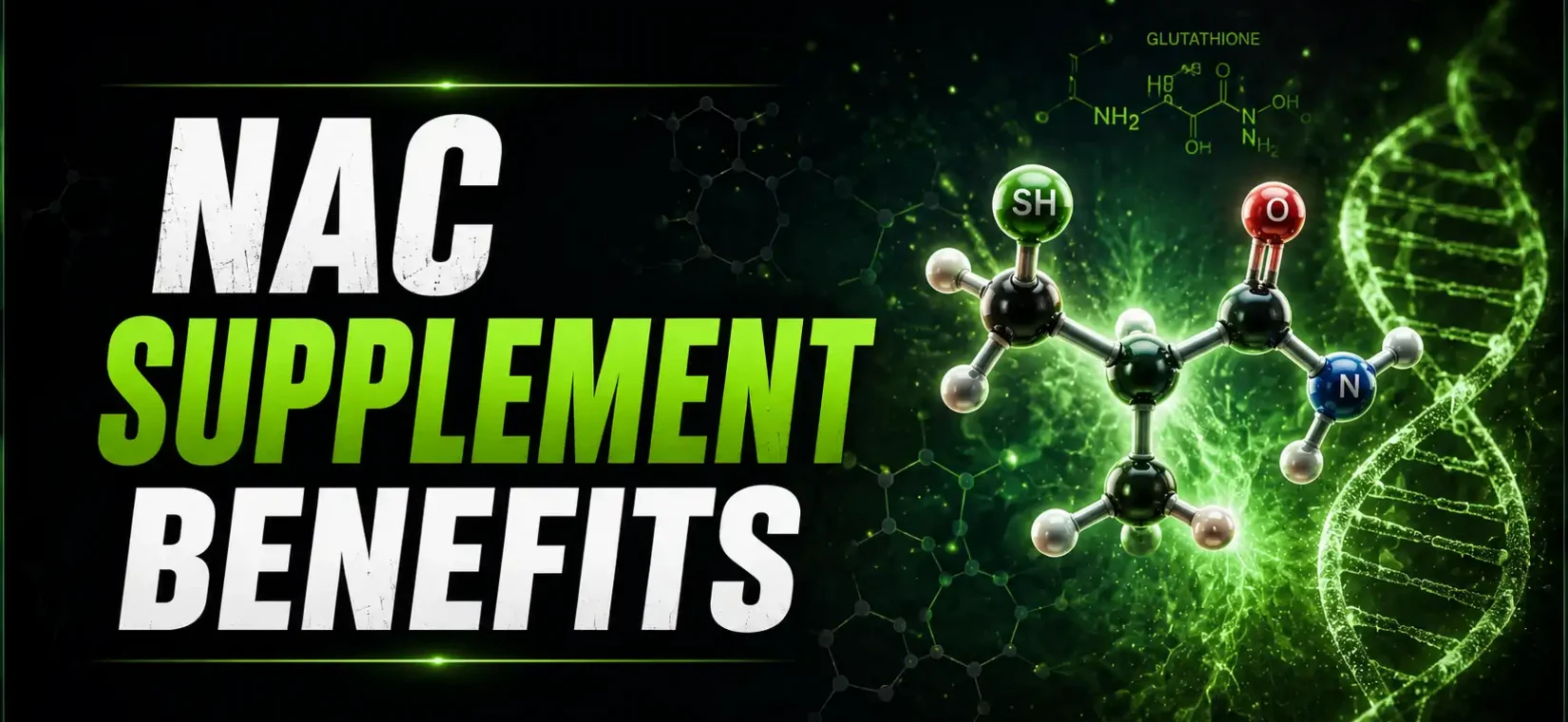
NAC doesn’t get the attention it deserves. While most people are chasing the latest muscle-building stack or fat burner, one of the most clinically validated supplements in existence — with decades of research behind it — sits quietly on the shelf, underused and misunderstood.
N-Acetyl Cysteine (NAC) is not a new discovery. It has been used in hospitals worldwide for over 50 years to treat acute liver failure and paracetamol (acetaminophen) overdose. That same mechanism — rapidly replenishing the body’s master antioxidant, glutathione — is exactly why it has become one of the most important supplements for anyone serious about liver health, detoxification, immunity, and long-term organ protection.
This guide covers everything: what NAC actually does in the body, the evidence behind its benefits, the correct dose, the best form, and who needs it most.
⚡ QUICK VERDICT
| What NAC does | Replenishes glutathione — the body’s master antioxidant |
| Primary benefit | Liver protection & detoxification |
| Clinical dose | 600–1,800mg/day |
| Best form | NAC (free form) — not liposomal needed |
| Our top pick with NAC | Invictus Liver 🥇 |
Table of Contents
What Is NAC?
NAC stands for N-Acetyl Cysteine. It is the acetylated, stable form of the amino acid L-cysteine — one of three amino acids (along with glycine and glutamate) required to synthesise glutathione inside cells.
Glutathione is the most abundant and most important antioxidant produced by the human body. It neutralises free radicals, supports phase II liver detoxification, regenerates other antioxidants (including Vitamins C and E), and plays a central role in immune function. The problem is that glutathione cannot be effectively absorbed when taken directly as a supplement — the molecule is broken down in the gut before it reaches the bloodstream. NAC bypasses this by providing the rate-limiting precursor that the body uses to make its own glutathione intracellularly.
This is why NAC is used in hospitals worldwide as the standard treatment for acute liver failure from paracetamol overdose — it rapidly restores liver glutathione stores and prevents irreversible hepatocyte damage. That same mechanism, at lower doses, makes it one of the most effective daily supplements for liver protection, detoxification, and antioxidant support.
How NAC Works in the Body
| Mechanism | What Happens | Outcome |
|---|---|---|
| Glutathione precursor | NAC donates cysteine — the rate-limiting amino acid for GSH synthesis | Raises intracellular glutathione levels |
| Direct antioxidant | The thiol (-SH) group in NAC directly scavenges reactive oxygen species | Reduces oxidative stress independently of GSH |
| Liver phase II support | Glutathione conjugates with toxins to make them water-soluble for excretion | Accelerates hepatic detoxification |
| NF-κB inhibition | NAC suppresses NF-κB — the master regulator of inflammatory gene expression | Reduces systemic and hepatic inflammation |
| >Mucolytic action | Breaks disulfide bonds in mucus proteins, reducing viscosity | Supports respiratory clearance |
7 Evidence-Based NAC Benefits
1. Liver Protection and Detoxification
The liver processes every substance that enters the body — food, alcohol, medications, environmental toxins, and metabolic waste. This process generates reactive oxygen species (free radicals) that can damage hepatocytes (liver cells) when antioxidant defences are overwhelmed. NAC directly replenishes hepatic glutathione — the liver’s primary defence mechanism — reducing oxidative damage and supporting the phase II detoxification pathways that convert fat-soluble toxins into water-soluble compounds for elimination.
Clinical research shows NAC supplementation significantly reduces liver enzyme markers (ALT and AST) in patients with non-alcoholic fatty liver disease, drug-induced liver injury, and chronic liver disease — indicating reduced hepatocellular damage.
| Study | Finding | Source |
|---|---|---|
| Nekam et al. (1997) | NAC significantly reduced oxidative stress markers and liver enzyme levels in chronic liver disease patients | PubMed 9329536 |
2. Glutathione Replenishment
Glutathione (GSH) declines with age, chronic stress, alcohol consumption, poor diet, and illness. Supplementing directly with glutathione has limited efficacy due to gut degradation. NAC is the most evidence-backed method to raise intracellular GSH — it has been shown in multiple controlled trials to significantly increase blood and tissue glutathione levels within hours of administration.
This makes NAC uniquely valuable for anyone over 35, regular drinkers, people taking medications processed by the liver (NSAIDs, statins, antibiotics), and anyone under significant physiological or environmental stress.
| Study | Finding | Source |
|---|---|---|
| Schmitt et al. (2015) | Oral NAC supplementation significantly increased erythrocyte glutathione levels vs placebo in healthy adults | PubMed 25521458 |
3. Immune System Support
Glutathione is essential for the activation, proliferation, and function of T-lymphocytes and natural killer (NK) cells. Low GSH status is associated with impaired immune responses, increased susceptibility to infection, and slower recovery from illness. NAC-driven GSH replenishment directly supports immune cell function — particularly relevant during periods of high stress, illness, or intensive training when immune function is typically suppressed.
| Study | Finding | Source |
|---|---|---|
| De Flora et al. (1997) | NAC supplementation reduced influenza-like episodes and severity by 54% vs placebo over 6 months in elderly subjects | PubMed 9064038 |
4. Reduction of Oxidative Stress
Oxidative stress — the imbalance between free radical production and antioxidant defences — is a root driver of cellular ageing, metabolic disease, cardiovascular damage, and liver injury. NAC addresses oxidative stress through two simultaneous pathways: raising glutathione (the primary intracellular antioxidant system) and directly neutralising free radicals via its thiol group. This dual action makes it more effective than single-mechanism antioxidants like Vitamin C or E.
| Study | Finding | Source |
|---|---|---|
| Aldini et al. (2018) | NAC demonstrated significant reduction in systemic oxidative stress markers (MDA, 8-OHdG) across multiple clinical populations | PubMed 29758300 |
5. Respiratory Health
NAC has a well-established mucolytic (mucus-thinning) mechanism — it breaks disulfide bonds in mucus glycoproteins, reducing viscosity and making it easier to clear from airways. This makes it clinically useful for chronic obstructive pulmonary disease (COPD), bronchitis, and respiratory infections. For anyone living in high-pollution urban environments — where particulate matter chronically stresses airway mucosa — NAC provides meaningful respiratory protection through both its mucolytic action and antioxidant effects on airway epithelium.
| Study | Finding | Source |
|---|---|---|
| Grandjean et al. (2000) | NAC significantly reduced exacerbations in COPD patients and improved quality of life vs placebo over 3 years | PubMed 10717466 |
6. Exercise Recovery and Muscle Protection
Intense training generates significant oxidative stress in muscle tissue. While some reactive oxygen species are necessary for training adaptation, excess oxidative stress impairs recovery, increases DOMS (delayed onset muscle soreness), and slows muscle repair. NAC has been shown to reduce exercise-induced oxidative stress markers, preserve muscle glutathione levels during prolonged exertion, and reduce fatigue in trained athletes. For bodybuilders and strength athletes using high training volumes, NAC supports the recovery environment without blunting adaptation signals.
| Study | Finding | Source |
|---|---|---|
| Medved et al. (2004) | NAC infusion improved time to fatigue in trained cyclists and reduced oxidative stress during prolonged high-intensity exercise | PubMed 15213095 |
7. Support for Non-Alcoholic Fatty Liver Disease (NAFLD)
NAFLD — the accumulation of excess fat in liver cells without alcohol as a cause — is one of the fastest-growing liver conditions globally, driven by sedentary lifestyles, high-calorie diets, and metabolic dysfunction. Oxidative stress and inflammation are central to its progression. Multiple clinical studies have found NAC supplementation reduces liver fat accumulation, improves liver enzyme profiles (ALT, AST, GGT), and reduces markers of hepatic inflammation in NAFLD patients — making it one of the best-evidence natural interventions for this condition.
| Study | Finding | Source |
|---|---|---|
| Khoshbaten et al. (2010) | NAC supplementation for 8 weeks significantly reduced ALT, AST, and ALP enzyme levels in NAFLD patients vs placebo | PubMed 20976010 |
NAC Dosage: How Much to Take
NAC dosing varies by purpose. Here is the evidence-based framework:
| Purpose | Daily Dose Range | Notes |
|---|---|---|
| General antioxidant / liver maintenance | 600mg/day | Standard daily supplementation dose |
| NAFLD / liver disease support | 800–1,200mg/day | Doses used in NAFLD clinical trials |
| Bodybuilders / oral compound users | 800–1,800mg/day | Higher hepatic load warrants higher dose |
| Respiratory support (COPD) | 600–1,200mg/day | Split into 2–3 doses for sustained effect |
Timing: NAC is best taken with food to minimise the mild nausea that can occur on an empty stomach. Splitting the daily dose into two servings (morning and evening) maintains more consistent plasma levels.
Form: Standard NAC (free form capsule or tablet) has good bioavailability and is the form used in virtually all clinical research. Liposomal NAC is not necessary and has limited additional evidence. Effervescent NAC (common in European formulations) is equivalent in efficacy to capsule form.
NAC in Invictus Liver — 800mg ✅
Clinical dose for liver support: 600–1,200mg. Invictus Liver: 800mg. Clinically dosed ✓
Who Needs NAC Most
| Who | Why NAC Matters |
|---|---|
| Bodybuilders & strength athletes | High training volumes generate oxidative stress; liver processes all supplements and metabolic byproducts |
| Anyone using oral supplements (creatine, pre-workouts, protein) | All oral compounds are processed by the liver — NAC supports hepatic detox capacity |
| Regular alcohol consumers | Alcohol metabolism depletes hepatic glutathione; NAC directly restores it |
| Men over 35 | Glutathione production declines with age; NAC supplementation offsets this decline |
| Urban professionals (high pollution exposure) | Air pollution generates free radicals that deplete glutathione in lung and liver tissue |
| People with NAFLD or elevated liver enzymes | Most clinically studied natural intervention for reducing hepatic oxidative stress and ALT/AST |
| >Frequent medication users (NSAIDs, antibiotics, statins) | Many common medications deplete glutathione as a metabolic byproduct |
Invictus Liver: NAC at Clinical Dose + Full Liver Support Stack
Getting NAC right requires more than just the molecule — it requires the right dose, and ideally a formula that addresses liver health from multiple angles simultaneously. Taking NAC in isolation addresses one mechanism. Invictus Liver pairs clinical-dose NAC with TUDCA, Milk Thistle, and supporting ingredients — each working on a different hepatoprotective pathway.
NAC (N-Acetyl Cysteine) — 800mg ✅
Clinical range: 600–1,200mg. Invictus Liver: 800mg. Clinically dosed ✓
TUDCA (Tauroursodeoxycholic Acid) — 300mg ✅
Clinical range: 250–750mg. Invictus Liver: 300mg. Clinically dosed ✓
Milk Thistle (80% Silymarin) — 500mg ✅
Clinical range: 420–600mg silymarin extract. Invictus Liver: 500mg. Clinically dosed ✓
How Each Ingredient Protects the Liver
| Ingredient | Primary Mechanism | What It Targets |
|---|---|---|
| NAC | Glutathione precursor + direct antioxidant | Oxidative stress, phase II detox, GSH depletion |
| TUDCA | Bile acid — reduces ER stress, protects hepatocytes from apoptosis | Cholestasis, bile duct stress, cell death |
| Milk Thistle | Silymarin stabilises hepatocyte membranes, blocks toxin uptake | Membrane integrity, toxin entry, fibrosis |
What to Expect: Timeline
| Timeframe | What Typically Happens |
|---|---|
| Week 1–2 | Glutathione levels begin rising; some men notice reduced fatigue and improved morning energy |
| Week 3–4 | Reduced post-training inflammation; better recovery between sessions; clearer skin in some users |
| Week 6–8 | Liver enzyme improvements measurable in bloodwork; sustained energy improvement |
| Week 8–12 | Full hepatoprotective benefit established; oxidative stress markers at new baseline |
🏆 FINAL VERDICT
NAC is one of the most clinically validated supplements available — hospital-grade evidence, decades of research, and a mechanism (glutathione replenishment) that addresses one of the most important and most overlooked aspects of health: your liver’s ability to neutralise the constant load of toxins, metabolites, and oxidative stress it handles every day.
If you train hard, take supplements, drink occasionally, or simply want to protect your liver as you age — NAC at 600–800mg daily is one of the highest-value additions you can make to your stack.
Invictus Liver pairs 800mg of clinical-dose NAC with TUDCA and Milk Thistle — covering three distinct hepatoprotective mechanisms in one formula. The most complete liver support stack available in India.
Frequently Asked Questions
What is NAC supplement used for?
NAC is primarily used to replenish glutathione — the body’s master antioxidant — supporting liver detoxification, reducing oxidative stress, and protecting hepatocytes from damage. It is also used clinically for respiratory conditions (as a mucolytic), immune support, and in hospitals as the standard treatment for paracetamol-induced liver failure.
How much NAC should I take daily?
For general liver and antioxidant support, 600mg/day is the standard dose. For active liver support (NAFLD, regular alcohol consumption, medication use, bodybuilding), 800–1,200mg/day is more appropriate. Doses above 1,800mg/day should be used only under medical guidance.
Can I take NAC every day?
Yes — NAC is safe for daily use at recommended doses. It has an excellent long-term safety profile demonstrated across decades of clinical use. Most benefits (glutathione elevation, liver enzyme improvement) require consistent daily supplementation over 4–12 weeks to fully manifest.
Does NAC actually raise glutathione?
Yes — this is one of the most consistently demonstrated effects in NAC research. Because NAC provides cysteine (the rate-limiting precursor to glutathione synthesis), oral supplementation reliably raises intracellular and blood glutathione levels. This is why NAC is considered more effective at raising GSH than direct glutathione supplementation, which is poorly absorbed orally.
Is NAC good for bodybuilders?
Yes — for several reasons. Intense training generates significant oxidative stress that depletes glutathione in muscle and liver tissue. The liver also processes all oral supplements, protein metabolites, and creatine — increasing hepatic load. NAC at 800mg+ supports recovery, reduces exercise-induced oxidative damage, and protects the liver against the increased metabolic burden of a serious training and supplementation programme.
What is the difference between NAC and glutathione supplements?
Direct glutathione supplements are broken down in the gut before reaching the bloodstream, making them largely ineffective at raising tissue GSH levels. NAC bypasses this by providing the precursor cysteine directly to cells, which then synthesise glutathione intracellularly. This is why NAC is the preferred clinical approach for raising glutathione — it is absorbed intact and converted where it is needed.
Can NAC be taken with other liver supplements?
Yes — NAC combines well with TUDCA and Milk Thistle (Silymarin), as each works on a different hepatoprotective mechanism. NAC addresses oxidative stress and glutathione depletion; TUDCA protects against bile acid toxicity and ER stress; Milk Thistle stabilises hepatocyte membranes and blocks toxin uptake. This triple-mechanism approach is exactly what Invictus Liver is built around.
Related Reading
- Invictus Liver Review — Full Ingredient Deep Dive
- TUDCA Benefits — Why It’s the Most Powerful Liver Supplement
- Best Liver Support Supplement for Bodybuilders in India
References
| # | Study | Link |
|---|---|---|
| 1 | Nekam et al. (1997) — NAC and oxidative stress in chronic liver disease | PubMed 9329536 |
| 2 | Schmitt et al. (2015) — Oral NAC and glutathione levels in healthy adults | PubMed 25521458 |
| 3 | De Flora et al. (1997) — NAC and reduction of influenza-like episodes in elderly | PubMed 9064038 |
| 4 | Aldini et al. (2018) — NAC and systemic oxidative stress markers | PubMed 29758300 |
| 5 | Grandjean et al. (2000) — NAC and COPD exacerbations | PubMed 10717466 |
| 6 | Medved et al. (2004) — NAC and exercise fatigue in trained athletes | PubMed 15213095 |
| 7 | Khoshbaten et al. (2010) — NAC and liver enzymes in NAFLD patients | PubMed 20976010 |